Origins and Founding (1980-1993)
K-1 grew out of Seidokaikan, a full-contact karate organization founded in 1980 by Kazuyoshi Ishii, a former Kyokushin karate practitioner who broke away to promote a more open style of stand-up fighting. Seeking to determine the strongest heavyweight striker regardless of discipline, Ishii created K-1 in 1993 as a separate kickboxing promotion governed by a unified ruleset that drew fighters from karate, kickboxing, Muay Thai, savate, kung fu, and boxing. The name 'K-1' was officially explained as a reference to karate, kickboxing, and kung fu, combined with the idea of crowning a single number-one champion.
The Inaugural Grand Prix and Early Years (1993-1996)
The first event, K-1 Grand Prix '93, was held on April 30, 1993, at Yoyogi National Gymnasium in Tokyo before roughly 12,000 spectators. It used a single-night, eight-man elimination tournament format that became the promotion's signature. Croatia's Branko Cikatic won the inaugural tournament, defeating his opponents by knockout. Over the following years the heavyweight Grand Prix established itself as the sport's premier event, with Dutch fighter Peter Aerts winning in 1994 and 1995 and Switzerland's Andy Hug taking the title in 1996. Hug, with his distinctive axe kick, became one of the promotion's most popular figures until his death from leukemia in 2000.
The Golden Era (1997-2009)
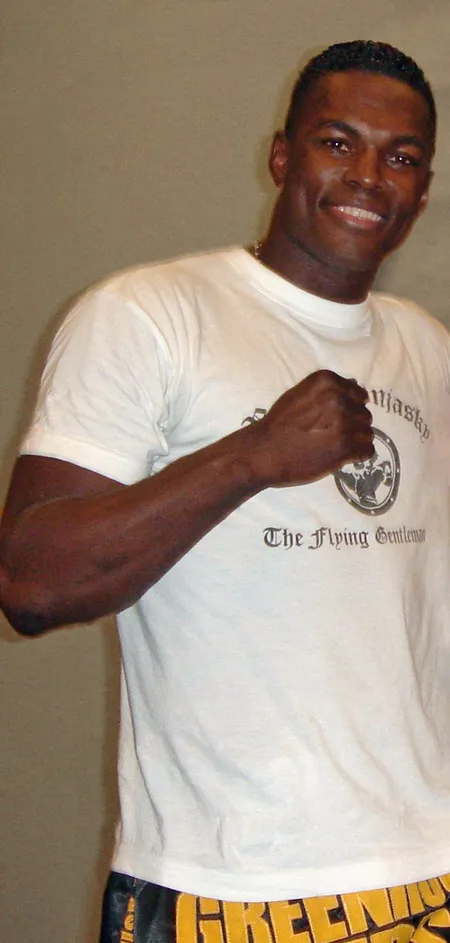
K-1 reached its commercial and competitive peak under the Fighting and Entertainment Group (FEG). From 1997 to 2006 the season-ending K-1 World Grand Prix Final was staged at the Tokyo Dome, drawing large crowds and major Japanese television audiences. The heavyweight division was dominated by a group of elite, mostly Dutch strikers: Ernesto Hoost won four Grand Prix titles (1997, 1999, 2000, 2002), Remy Bonjasky won three (2003, 2004, 2008), and Semmy Schilt won four (2005, 2006, 2007, 2009). Other champions included New Zealand's Mark Hunt (2001).
K-1 World MAX and the Lighter Divisions (2002-2010)
In 2002 K-1 launched K-1 World MAX, a tournament for the 70 kg middleweight division that ran parallel to the heavyweight Grand Prix and broadened the promotion's appeal. The lighter division produced its own stars and intense rivalries: Japan's Masato won the World MAX title in 2003 and 2008, Thailand's Buakaw Banchamek (then competing as Buakaw Por. Pramuk) won in 2004 and 2006, and the Netherlands' Andy Souwer won in 2005 and 2007. Italy's Giorgio Petrosyan, known for his technical precision, won the World MAX championship in 2009 and again in 2010, becoming one of the era's most acclaimed technical fighters.
Financial Collapse and Ownership Changes (2010-2013)
By 2010 FEG was under severe financial strain. Alistair Overeem won the 2010 World Grand Prix, which proved to be the last under FEG management. The group publicly acknowledged its financial problems in 2011 and went bankrupt in 2012, with fighters reporting unpaid purses and disputes over the transfer of the K-1 name. In 2012 EMCOM Entertainment acquired the brand and established K-1 Global Holdings Ltd., a Hong Kong-registered company, to take over operations, ending the original FEG-run era of the promotion.
Relaunch and Modern Era (2014-present)
On May 29, 2014, the promotion relaunched in Japan under the K-1 banner with a restructured set of weight classes spanning lighter divisions rather than the heavyweight focus of the original era. The revived K-1 has operated primarily as a Japan-based promotion built around domestic and Asian talent, with planning and production handled by M-1 Sports Media. In February 2023, M-1 Sports Media acquired the global licensing rights to the K-1 brand and established the K-1 International Federation to manage the trademark and international operations, consolidating control of a name that had been contested since FEG's collapse.
 Netherlands
 Morocco
 Thailand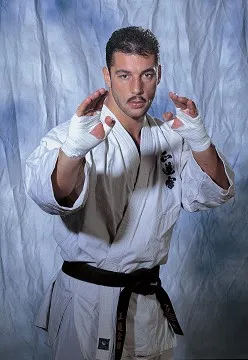
 Switzerland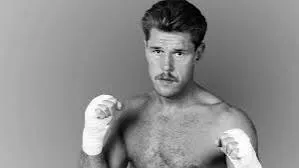

 Japan
Japan
 France

 Croatia
 New Zealand

 Brazil
 Germany
 Greece
 United States